
EXIT/Or don't/When On-Premises Wins
When On-Premises Wins
The cloud is not always the right answer. Here are the conditions where it genuinely isn't.
The Conditions That Favour Your Own Hardware
The case for on-premises infrastructure is not about nostalgia, ideology, or refusing to modernise. It is about a specific set of workload characteristics that the cloud's economic model handles poorly. Get these characteristics wrong, and you will either overpay or build elaborate workarounds for constraints the cloud never designed away. Get them right, and on-premises is simply the rational choice.
Sustained, predictable high utilisation. Cloud pricing is built around variability. The provider charges a premium for on-demand capacity because that premium subsidises the risk of holding spare capacity for you. When your workload runs at consistently high utilisation — say, a batch processing pipeline that consumes the same core count, month after month, twelve months a year — that premium buys you nothing. You are paying the variable-demand surcharge for what is, in practice, a fixed demand. Committed-use discounts (reserved instances, savings plans) narrow the gap, but they do not close it; they also introduce lock-in to a specific instance family or region. At sustained utilisation above roughly seventy to eighty percent, the annualised cost of owned hardware — depreciated over three to five years, including power, cooling, and maintenance — frequently undercuts equivalent cloud capacity. The crossover point depends on your cost of capital and operational maturity, but it exists, and pretending otherwise is a vendor's argument, not an engineer's.
Data residency and sovereignty requirements that are genuinely non-negotiable. Some regulatory regimes restrict where data can physically reside, who can access the systems that process it, or which legal jurisdiction governs the infrastructure. Cloud providers have responded with region selection, dedicated tenancy options, and sovereign-cloud products — and those answers are often sufficient. But not always. Certain government classifications, specific financial-sector mandates, and a growing body of national data-protection law impose requirements that a hyperscaler's contractual commitments cannot fully satisfy, either because the provider's audit posture does not map cleanly onto the required certification, or because the underlying legal exposure of using a foreign-domiciled provider remains unresolved. When legal counsel and your regulator agree that on-premises (or a nationally-controlled colocation facility) is the only defensible answer, that conversation is over. The architecture follows the constraint.
Predictable cost ceilings as a hard business requirement. Cloud spend is inherently variable, and that variability is not always manageable. Egress charges, inter-service data transfer, storage API call volume — these are difficult to model precisely in advance, and they compound unpredictably as systems grow. For organisations with fixed IT budgets, public-sector bodies operating under procurement rules, or any situation where a surprise bill is institutionally unacceptable, the predictability of a capital expenditure model has real value. You buy the hardware; you know the number. The egress charges nobody plans for do not exist in a datacentre you own. That is not a trivial benefit when the alternative is explaining a forty-percent cost overrun to a finance committee.
Latency requirements that geography cannot solve. If your workload requires sub-millisecond round trips to storage or to another system, and that other system is a physical appliance in your facility — specialist trading hardware, laboratory instrumentation, industrial control systems — the cloud is not a feasible substrate. You cannot route around physics. The nearest availability zone is still kilometres away; the nearest region may be hundreds. On-premises is not a fallback here; it is the only option.
What On-Premises Does Not Give You
On-premises infrastructure still demands operational staffing you may not have or want.
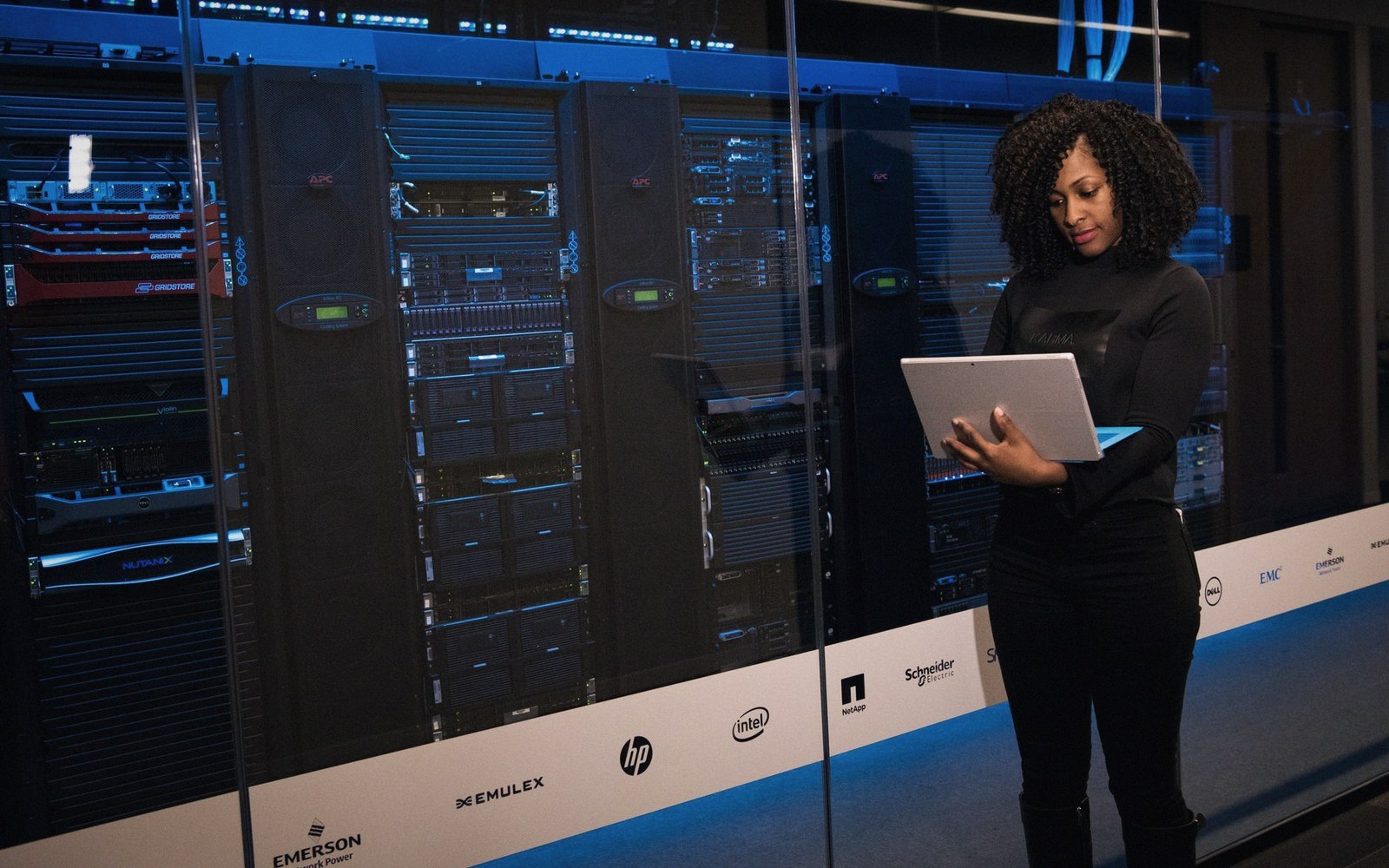
Winning on these axes does not mean winning unconditionally. On-premises infrastructure still demands operational staffing you may not have or want. Hardware refresh cycles create their own cost cliffs. Scaling up requires lead time that cloud capacity does not. Disaster recovery is your problem to engineer and fund entirely. None of this negates the cases above — it simply means you should enter the decision with clear eyes. The repatriation argument is a real one for some workloads; it is not a general repudiation of cloud computing.
The honest framing is this: the cloud is an excellent answer for variable demand, rapid scaling, and workloads whose requirements fit inside the provider's operational model. On-premises is the better answer when your utilisation is high and predictable, when your regulatory position is genuinely constrained, or when the economics of committed cloud spend lose to the economics of owned hardware on a three-to-five-year horizon. Match the tool to the actual workload. The rest is marketing.